
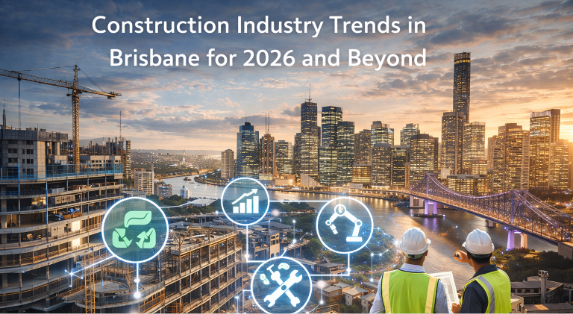
As Brisbane’s urban landscape continues to evolve, the construction industry is undergoing significant transformation. Across residential, commercial, and infrastructure sectors, new trends are shaping how projects are planned, executed, and delivered. Among the most impactful areas of change is the role of construction management services in Brisbane, which are becoming more strategic, technologically driven, and aligned with sustainability standards. As we move into 2026 and beyond, understanding these trends is essential for developers, investors, contractors, and stakeholders who want to remain competitive and resilient.
This article explores the major construction industry trends influencing Brisbane’s market and highlights how construction management services are adapting to meet future demands. It also touches on how forward-thinking companies, such as Milan Property Group, are navigating these shifts in the local context.
1. Digital Transformation and Smart Construction Practices
The construction industry is embracing digital transformation at an unprecedented pace. Technologies such as Building Information Modeling (BIM), cloud-based project management tools, drones, and advanced analytics are becoming standard components of construction projects. For construction management services in Brisbane, these technologies enhance collaboration, improve accuracy, and streamline workflows between architects, engineers, contractors, and clients.
BIM, in particular, enables real-time visualization of project stages, allowing construction managers to identify potential issues before they become costly problems. This predictive visibility reduces delays and cost overruns. Meanwhile, project management platforms enhance transparency, ensuring that all stakeholders are aligned throughout the construction lifecycle.
The integration of smart devices and IoT sensors on sites provides real-time data on workflow progress, equipment performance, and resource utilization. This shift toward data-driven decision-making improves efficiency and safety while allowing managers to optimize scheduling and cost management.
As Brisbane’s construction market grows, the adoption of digital tools will continue to expand, reshaping the way construction management services are delivered and how projects are executed from planning through completion.
2. Emphasis on Sustainable and Green Building Practices
Sustainability has moved from an optional preference to a core requirement in the construction industry. With increasing environmental awareness, government regulations targeting reduced emissions, and rising energy costs, sustainable construction practices are now non-negotiable. For construction managers in Brisbane, integrating sustainable strategies into project planning and delivery is both a regulatory necessity and a market differentiator.
Green building certifications such as NABERS and Green Star are becoming key benchmarks for quality and environmental performance. Construction management services are now tasked with implementing energy-efficient designs, waste reduction strategies, water recycling plans, and materials sourced from sustainable supply chains.
Brisbane’s subtropical climate further underscores the importance of energy efficiency in built environments. Projects that prioritize passive cooling, natural ventilation, and sustainable materials not only benefit the environment but also provide long-term cost savings for owners and occupants.
Companies like Milan Property Group are at the forefront of incorporating sustainability into development strategies, ensuring that construction projects align with both future-focused environmental standards and long-term operational efficiency.
3. Workforce Evolution and Skills Development
Another major trend affecting the construction industry is workforce evolution. The sector in Brisbane and across Australia is experiencing labor market challenges, including shortages in skilled trades, project management professionals, and technical specialists. In response, construction companies are adopting new strategies that focus on skills development, training programs, and recruitment techniques.
For providers of construction management services in Brisbane, navigating workforce constraints requires a proactive approach. Continuous training, upskilling, and technology adoption help bridge skill gaps while improving overall project performance. Furthermore, firms are partnering with educational institutions, industry bodies, and apprenticeships to build a pipeline of skilled workers ready to tackle future projects.
Automation and AI are also reshaping labor requirements. While certain manual tasks become automated, demand grows for workers capable of managing advanced machinery, digital platforms, and data analytics tools. This hybrid skill set—combining technical know-how with digital fluency—defines the future workforce.
The evolution of workforce expectations also reflects broader demographic changes. Millennials and Gen Z professionals value flexible work cultures, career development opportunities, and tech-enabled environments. Construction companies that align their workforce strategies with these preferences are better positioned for long-term success.
4. Rising Demand for Infrastructure and Urban Renewal Projects
Brisbane’s growth trajectory as a major urban centre is driving strong demand for infrastructure and urban renewal initiatives. Investments in transport networks, public amenities, housing developments, and mixed-use precincts are creating a dynamic pipeline of projects. These developments, in turn, are expanding opportunities for construction management services in Brisbane.
Urban renewal projects, in particular, are reshaping inner-city precincts and revitalizing ageing infrastructure. Modern construction management practices prioritize integrated planning, stakeholder engagement, and risk mitigation across complex, multi-stage projects.
Construction management firms are now tasked with coordinating across sectors such as civil engineering, sustainability planning, and community consultation. This cross-disciplinary approach is crucial as public expectations for quality, transparency, and environmental performance continue to rise.
As Brisbane prepares for future population growth and economic expansion, infrastructure developments will play a central role in shaping the city’s future. Effective construction management services will be instrumental in delivering these projects on time, within budget, and with minimal disruption to local communities.
5. Focus on Safety, Compliance, and Risk Management
Safety and compliance remain paramount in construction, particularly as project complexity increases. Brisbane’s regulatory landscape demands strict adherence to workplace health and safety standards, building codes, and environmental requirements. For construction managers, this means embedding safety and risk management practices into every phase of project execution.
Modern construction management services in Brisbane are increasingly leveraging digital tools to monitor safety performance in real time. Wearable technologies, site sensors, and automated reporting systems help identify potential hazards before they escalate, thereby reducing workplace incidents.
Compliance management is also a key differentiator. Whether it’s meeting local council regulations or national safety standards, construction teams are held accountable for maintaining rigorous documentation, transparent reporting, and proactive risk management processes.
By integrating compliance frameworks with digital tracking and analytics, construction managers not only protect their workforce but also strengthen trust with stakeholders and clients.
6. Integration of Flexible and Mixed-Use Developments
Market demand in Brisbane is shifting toward flexible and mixed-use developments that combine residential, commercial, and lifestyle components within a single precinct. This trend reflects changing urban expectations, particularly among younger demographics seeking live-work-play environments.
For construction management services in Brisbane, delivering mixed-use projects requires sophisticated planning and coordination. These developments involve multiple construction phases, diverse stakeholder groups, and complex logistical challenges. Construction managers must balance residential quality standards with commercial delivery demands and public amenity integration.
This evolution is reflective of broader global trends that prioritise walkable neighbourhoods, efficient land use, and liveable urban precincts. Developers that adapt to this trend achieve higher occupancy rates and strong market appeal.
Forward-thinking firms like Milan Property Group are already aligning their project portfolios with these expectations, investing in developments that support holistic lifestyle experiences while maintaining strong investment fundamentals.
Conclusion
The construction industry in Brisbane is entering a new era defined by digital innovation, sustainability, workforce evolution, and changing market demands. As we approach 2026 and beyond, these trends will continue to shape how projects are delivered, managed, and experienced. For providers of construction management services in Brisbane, adapting to these shifts is essential to maintaining competitiveness and delivering value to clients and stakeholders.
By embracing technology, fostering sustainable practices, addressing workforce challenges, and focusing on complex urban development strategies, the industry is positioning itself for long-term success. Companies like Milan Property Group exemplify this forward-thinking approach, setting benchmarks in quality, planning, and market insight.
