
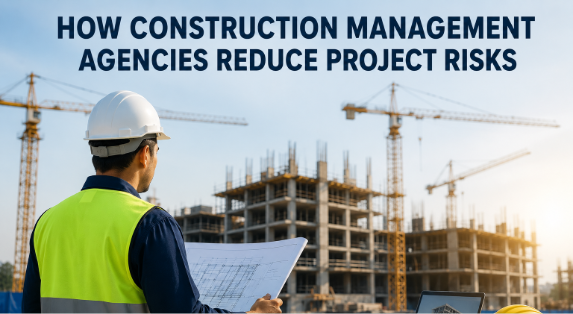
Construction projects are inherently complex, involving multiple stakeholders, tight budgets, regulatory frameworks, and strict timelines. Without structured oversight, even well-planned developments can face cost overruns, delays, safety incidents, and contractual disputes.
This is where a construction management agency in Ashgrove plays a critical role—bringing systematic risk control, coordination, and accountability to every stage of a project. In growing residential and commercial markets like Ashgrove, construction management services are increasingly essential to ensure predictable outcomes and reduced uncertainty.
Brands like Milan Property Group demonstrate how structured management frameworks can significantly minimize project risks while improving efficiency and delivery quality.
1. Construction Risk Landscape and the Strategic Role of Agencies
Understanding Risk in Modern Construction
Construction projects involve a high degree of uncertainty due to the interaction of design complexity, financial investment, regulatory compliance, and on-site execution challenges. In rapidly developing urban areas such as Ashgrove, these risks become even more pronounced due to strict building regulations, labor constraints, and increasing material costs.
A construction management agency in Ashgrove serves as the central control mechanism that aligns all moving parts of a project. Instead of allowing risks to emerge independently across design, procurement, and execution, the agency integrates risk management into a unified system.
Key Categories of Construction Risk
- Financial instability due to inaccurate budgeting or inflation
- Timeline disruptions caused by poor sequencing or delays
- Operational inefficiencies from subcontractor mismanagement
- Legal exposure due to non-compliance or contract ambiguity
- Safety incidents arising from inadequate site control
Why Structured Oversight Matters
Without a coordinated system, these risks tend to overlap and amplify each other. A delay in one activity can cascade into cost escalation and contractual disputes.
A professional construction management agency in Ashgrove eliminates this fragmentation by implementing structured governance models. Firms like Milan Property Group demonstrate how integrated oversight ensures every phase of construction is monitored, evaluated, and adjusted in real time to reduce uncertainty and improve predictability.
2. Pre-Construction Planning and Financial Risk Engineering
Foundational Planning and Feasibility Analysis
The first and most critical step in risk reduction is pre-construction planning. A construction management agency in Ashgrove begins by conducting in-depth feasibility studies, including site analysis, soil testing, environmental impact assessments, and structural design validation.
This stage identifies potential risks before physical work begins, reducing the likelihood of expensive mid-project changes.
Financial Structuring and Budget Control
Cost overruns are among the most common construction risks. Agencies mitigate this through detailed financial planning:
- Preparation of bill of quantities (BOQ)
- Market-aligned cost benchmarking
- Labor and material cost forecasting
- Contingency allocation for unforeseen expenses
A construction management agency in Ashgrove ensures that budgets are not static documents but dynamic financial frameworks that evolve with market conditions.
Continuous Financial Monitoring
Unlike traditional project models, modern agencies maintain real-time cost tracking systems that monitor procurement, labor billing, and contractor payments. This enables early detection of financial deviations.
Milan Property Group applies structured financial governance systems that provide transparency and allow stakeholders to make informed decisions throughout the project lifecycle.
3. Scheduling Precision, Procurement Control, and Vendor Risk Management
Advanced Project Scheduling Systems
Time-related risks can severely impact construction outcomes. A construction management agency in Ashgrove reduces scheduling risks through structured methodologies such as Critical Path Method (CPM), milestone tracking, and parallel task sequencing.
These systems ensure that every activity is logically aligned with dependencies, reducing idle time and workflow disruptions.
Procurement Risk Management
Procurement delays and material shortages are major contributors to project instability. Agencies mitigate this by:
- Forecasting material demand in advance
- Establishing reliable supplier networks
- Locking pricing agreements where possible
- Monitoring supply chain continuity
Vendor and Subcontractor Evaluation
A key responsibility of construction management agencies in Ashgrove is ensuring that only qualified vendors are engaged. This involves:
- Performance history analysis
- Financial stability checks
- Capability assessments
- KPI-based monitoring during execution
Outcome of Structured Coordination
By controlling procurement and vendor ecosystems, agencies eliminate unpredictable disruptions. This ensures smoother execution and minimizes downtime across construction phases.
4. Regulatory Compliance, Legal Structuring, and Contract Risk Control
Compliance with Local Construction Regulations
In regulated environments like Ashgrove, compliance failures can halt entire projects. A construction management agency in Ashgrove ensures strict adherence to building codes, zoning laws, and safety regulations.
This includes:
- Permit acquisition before project initiation
- Continuous compliance monitoring
- Inspection scheduling and documentation management
Contractual Risk Mitigation
Construction disputes often arise from poorly defined contracts. Agencies reduce this risk by ensuring contracts clearly define:
- Scope of work
- Responsibilities of each stakeholder
- Payment milestones
- Penalty and dispute resolution mechanisms
Change Order Management
Changes during construction are inevitable, but unmanaged changes create risk. Agencies implement structured change order systems to evaluate cost, timeline, and scope impacts before approval.
Integrated Legal Oversight
By combining compliance monitoring with contract governance, a construction management agency in Ashgrove ensures that legal risks are minimized and project continuity is protected throughout execution.
5. Safety Systems and Quality Assurance Frameworks
Construction Site Safety Management
Safety is one of the most critical risk areas in construction. Agencies implement structured safety systems including:
- Hazard identification protocols
- Mandatory safety inductions and training
- Equipment usage guidelines
- Emergency response planning
This reduces workplace accidents and improves operational efficiency.
Quality Assurance and Inspection Systems
Poor quality execution leads to structural issues and rework costs. A construction management agency in Ashgrove enforces strict quality control through:
- Material inspection before usage
- Stage-wise construction audits
- Third-party testing and validation
- Defect tracking and rectification processes
Continuous Monitoring of Standards
Quality and safety are not one-time checks but ongoing processes. Agencies maintain continuous monitoring systems that ensure compliance throughout the project lifecycle.
Milan Property Group integrates structured safety and quality protocols to ensure consistent delivery standards across all project stages.
6. Technology Integration, Communication Systems, and Final Risk Outcomes
Digital Transformation in Construction Management
Modern construction management agencies in Ashgrove rely heavily on technology to improve risk detection and decision-making accuracy:
- Building Information Modeling (BIM) for design coordination
- Drone surveillance for site monitoring
- IoT sensors for equipment tracking
- Project management dashboards for real-time updates
Communication and Coordination Systems
Miscommunication is a major hidden risk in construction. Agencies reduce this through:
- Centralized communication platforms
- Regular stakeholder reporting cycles
- Transparent decision-making workflows
- Structured coordination meetings
Integrated Risk Reduction Outcomes
When planning, execution, compliance, safety, and technology systems work together, the result is significantly reduced project uncertainty. Benefits include:
- Controlled project costs
- Improved delivery timelines
- Higher construction quality
- Stronger legal and safety compliance
Final Perspective
A construction management agency in Ashgrove transforms construction from a fragmented, high-risk activity into a controlled, data-driven process. With structured oversight and integrated systems, firms like Milan Property Group demonstrate how risk can be systematically reduced while improving overall project performance and reliability.
