
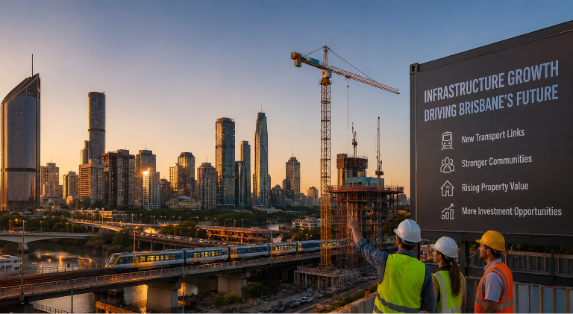
Brisbane is experiencing one of the most significant infrastructure-led transformations in Australia, driven by population growth, transport upgrades, and long-term planning initiatives. These developments are reshaping land value, construction activity, and investment patterns across the city. For property developers in Brisbane, infrastructure growth is not just a background factor—it is a primary driver of opportunity, risk, and strategic decision-making.
Companies such as Milan Property Group operate within this evolving landscape, where infrastructure projects directly influence where, how, and when new developments are delivered. Understanding this relationship is essential for anyone involved in property development, investment, or urban planning in Brisbane.
Infrastructure Expansion as a Catalyst for Development Demand
Infrastructure expansion—such as new highways, rail lines, hospitals, and commercial hubs—creates immediate and long-term demand for housing and mixed-use developments. When accessibility improves, previously underutilized land becomes viable for residential or commercial projects.
For property developers in Brisbane, this shift often signals new investment corridors. Areas once considered peripheral rapidly become attractive due to reduced travel times and improved connectivity to the central business district.
Transport infrastructure, in particular, plays a critical role. New train stations or highway expansions often lead to increased land value within surrounding suburbs. Developers monitor these changes closely to identify early-stage opportunities before prices peak.
Milan Property Group, like many established development firms, evaluates infrastructure announcements as part of its site acquisition strategy. Early positioning in growth corridors allows developers to secure land at competitive prices while benefiting from future appreciation driven by public investment.
Land Value Appreciation and Strategic Site Selection
One of the most direct impacts of infrastructure growth is land value escalation. As infrastructure projects progress from planning to completion, surrounding land typically experiences steady appreciation. This creates both opportunity and pressure for property developers in Brisbane.
Developers must act quickly and strategically to secure sites before values rise beyond feasible project margins. Timing becomes critical, as delays in decision-making can significantly impact project viability.
In Brisbane, infrastructure-led growth corridors—such as those surrounding transport upgrades or urban renewal precincts—are closely monitored by developers like Milan Property Group. These firms rely on market analysis, zoning insights, and government planning data to identify high-potential sites.
However, rising land costs also increase entry barriers, particularly for smaller developers. This intensifies competition and often leads to joint ventures, partnerships, or phased development strategies to manage financial exposure.
Improved Connectivity and Urban Sprawl Transformation
Infrastructure expansion does not only increase land value; it also reshapes urban geography. As transport systems improve, Brisbane experiences controlled urban sprawl, with residential and commercial developments extending further from the city center.
For property developers in Brisbane, improved connectivity opens up new suburban and peri-urban markets. Areas that were previously considered too remote become viable for large-scale housing estates, townhouse communities, and mixed-use precincts.
This decentralization reduces pressure on inner-city land while supporting population growth in outer suburbs. Developers benefit by gaining access to larger land parcels at comparatively lower costs, enabling more flexible project designs.
Milan Property Group often evaluates these emerging corridors for long-term development potential. Infrastructure-led expansion allows developers to plan staged communities that align with future population inflows and transport accessibility improvements.
Increased Construction Costs and Market Competition
While infrastructure growth creates opportunity, it also introduces challenges for property developers in Brisbane. One of the most significant pressures is rising construction costs. As demand for development increases in infrastructure-rich areas, labor and material costs often rise accordingly.
Competition for contractors, consultants, and skilled labor intensifies, particularly during peak infrastructure cycles. This can lead to project delays and increased budget constraints for developers.
Additionally, higher land values in infrastructure zones compress profit margins. Developers must carefully balance acquisition costs with projected returns, often requiring more sophisticated financial modeling and risk assessment.
Established firms such as Milan Property Group mitigate these challenges through strong supplier networks, long-term contractor relationships, and diversified project portfolios. This allows them to maintain stability even in highly competitive development environments.
Government Planning and Regulatory Influence
Infrastructure growth in Brisbane is closely tied to government planning policies. Zoning changes, development approvals, and urban renewal initiatives directly influence how property developers in Brisbane operate.
When infrastructure projects are announced, local governments often revise planning frameworks to support higher-density development near transport hubs. This creates opportunities for apartments, mixed-use buildings, and commercial precincts.
However, regulatory processes can also become more complex in high-growth areas. Developers must navigate environmental assessments, community consultation requirements, and infrastructure contribution fees.
Milan Property Group, like other experienced developers, integrates regulatory forecasting into its planning process. Understanding policy direction allows developers to align projects with government priorities, increasing approval success rates and reducing planning delays.
Long-Term Investment Stability and Market Confidence
Despite short-term challenges, infrastructure growth significantly enhances long-term market confidence. Investors view infrastructure-led development zones as lower-risk, high-growth opportunities.
For property developers in Brisbane, this translates into stronger pre-sales, improved financing conditions, and increased investor interest. Projects located near major infrastructure upgrades often achieve higher absorption rates and stronger price performance.
Milan Property Group benefits from this confidence cycle by positioning developments in high-growth corridors where infrastructure investment signals long-term demand stability.
Over time, this creates a self-reinforcing effect: infrastructure attracts development, development attracts population growth, and population growth justifies further infrastructure investment.
Conclusion
Infrastructure growth is one of the most powerful forces shaping the property development landscape in Brisbane. It influences land values, development opportunities, construction costs, and long-term investment outcomes.
For property developers in Brisbane, these changes represent both opportunity and complexity. Strategic positioning, market timing, and regulatory awareness are essential for success in an evolving urban environment.
Firms such as Milan Property Group demonstrate how experienced developers leverage infrastructure trends to identify high-value opportunities while managing risks effectively. As Brisbane continues to expand, the relationship between infrastructure and property development will remain central to the city’s growth story.
Ultimately, infrastructure does not just support development—it defines it.
