
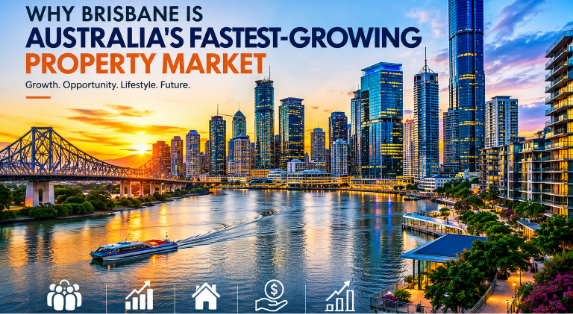
Australia’s property landscape continues to evolve, and Brisbane has emerged as one of the country’s most dynamic real estate destinations. Over the past few years, the Queensland capital has attracted significant attention from investors, homebuyers, and developers due to its strong economic growth, infrastructure investment, lifestyle appeal, and population increase. As demand for residential and commercial properties continues to rise, every real estate developer in Brisbane is witnessing unprecedented opportunities in the market.
From modern residential communities to mixed-use developments, Brisbane’s transformation is reshaping the city’s skyline and creating long-term value for property stakeholders. Companies such as Milan Property Group are helping drive this growth by delivering high-quality developments that meet the evolving needs of buyers and investors.
1. Brisbane’s Evolution Into a High-Growth Property Hub
Brisbane has undergone a significant transformation over the past decade, evolving from a relatively understated capital city into one of Australia’s most competitive and fastest-growing property markets. The city’s growth trajectory is driven by a combination of affordability, strong population inflow, infrastructure expansion, and increasing investor confidence. Compared to Sydney and Melbourne, Brisbane still offers relatively accessible property prices, which has positioned it as a prime destination for both domestic and international buyers.
A key driver of this transformation is the increasing activity of every real estate developer in Brisbane, who is responding to surging demand for residential apartments, townhouses, and master-planned communities. Developers are now focusing on mixed-use precincts that integrate residential living with retail, lifestyle, and transport accessibility.
The market has also matured significantly, shifting from traditional suburban expansion to well-planned urban renewal projects. Areas such as South Brisbane, Newstead, and West End have become hotspots for high-density developments. This urban shift is enabling Brisbane to accommodate its growing population more efficiently while maintaining a strong lifestyle appeal.
Another important factor is Brisbane’s improving global profile. With increased international investment and confidence in Australia’s economic stability, the city is now viewed as a strategic long-term investment destination. This has encouraged a wide range of property developers in Brisbane to expand their portfolios and introduce innovative housing solutions.
Companies such as Milan Property Group are contributing to this evolution by focusing on modern, sustainable, and high-quality residential developments. Their approach reflects the broader industry trend toward long-term value creation rather than short-term speculative development.
Overall, Brisbane’s transformation is not accidental—it is the result of structured planning, strong economic fundamentals, and the growing expertise of the real estate development sector.
2. Population Growth and Migration Driving Housing Demand
One of the most powerful forces behind Brisbane’s rapid property market expansion is its sustained population growth. Over recent years, Queensland has consistently recorded strong interstate migration, with thousands of Australians relocating from higher-cost cities such as Sydney and Melbourne. This migration trend is largely driven by affordability, lifestyle improvements, and employment opportunities.
As population increases, the demand for housing rises proportionally. This has placed significant pressure on supply, creating favorable conditions for every real estate developer in Brisbane to expand housing stock. Developers are now required to respond not just to volume demand but also to evolving buyer expectations, including sustainability, smart technology, and community-focused living environments.
Brisbane’s appeal is particularly strong among young professionals and families seeking a balanced lifestyle. The city offers lower density living, more space, and better affordability compared to other major Australian cities. This demographic shift has encouraged developers to diversify housing options, including apartments, townhouses, and integrated suburban communities.
In addition to interstate migration, international students and skilled migrants also contribute to housing demand. Brisbane’s strong education sector and employment opportunities continue to attract global talent, further supporting long-term property demand.
A property developer in Brisbane must therefore consider not only current demand but also future demographic shifts. Successful developments increasingly incorporate flexible housing designs that cater to diverse household structures and changing lifestyle needs.
Companies like Milan Property Group recognize these demographic trends and strategically plan developments in high-growth corridors. By aligning projects with population movement patterns, they ensure long-term occupancy and investment value.
Ultimately, population growth is not just increasing demand—it is reshaping how Brisbane is planned, developed, and lived in.
3. Infrastructure Expansion and Urban Transformation
Brisbane’s property growth is strongly supported by large-scale infrastructure investment, which is transforming the city into a more connected and efficient urban environment. Infrastructure development is one of the most critical indicators of long-term property value, and Brisbane is currently experiencing one of the most significant infrastructure upgrades in its history.
Major projects such as Cross River Rail, Brisbane Metro, road network expansions, and airport upgrades are improving accessibility across the city. These developments reduce commute times, increase connectivity between suburbs, and open up previously underdeveloped areas for residential and commercial growth.
For any real estate developer in Brisbane, proximity to infrastructure is a key factor in site selection. Properties located near transport hubs, business districts, and lifestyle precincts tend to experience stronger demand and higher capital appreciation over time.
Infrastructure investment is also encouraging urban renewal. Older industrial and underutilized areas are being transformed into modern residential and mixed-use communities. Suburbs such as Woolloongabba and Hamilton are prime examples of this transformation.
This shift from outward suburban expansion to inward urban redevelopment is changing Brisbane’s entire property landscape. Developers are now focusing on vertical growth through apartment complexes and integrated precincts rather than solely horizontal expansion.
A forward-thinking property developer in Brisbane must align projects with government infrastructure planning to maximize long-term value. Timing and location are critical factors in ensuring development success.
Companies such as Milan Property Group strategically position their projects in areas benefiting from infrastructure upgrades, ensuring strong future demand and investment stability.
Overall, infrastructure is not just supporting growth—it is actively shaping Brisbane’s future as a modern global city.
4. The Impact of the 2032 Olympic Games on Property Growth
Brisbane’s selection as the host city for the 2032 Olympic Games has significantly accelerated its property market momentum. Mega sporting events historically act as catalysts for urban transformation, infrastructure investment, and international exposure, and Brisbane is no exception.
The Olympic Games are expected to drive billions of dollars in infrastructure spending, including stadium upgrades, transport improvements, and urban redevelopment projects. This will have a direct impact on surrounding property markets, increasing demand and long-term value.
For a real estate developer in Brisbane, the Olympics present a once-in-a-generation opportunity to contribute to city shaping projects while benefiting from increased demand. Developers are already positioning themselves to take advantage of growth corridors linked to Olympic venues and transport infrastructure.
The global visibility brought by the Olympics will also enhance Brisbane’s international profile. This is likely to attract foreign investors, businesses, and residents, further strengthening the property market.
In addition, short-term demand for accommodation, rental properties, and hospitality infrastructure is expected to surge in the lead-up to the event. This creates multiple revenue opportunities across residential and commercial sectors.
A property developer in Brisbane must therefore consider both short-term and long-term impacts of the Olympics. While immediate demand will increase, the long-term legacy will be even more significant in terms of infrastructure and global recognition.
Companies such as Milan Property Group are well-positioned to benefit from this transformation by aligning their development strategy with Olympic-driven growth zones.
In essence, the 2032 Olympics are not just an event—they are a long-term catalyst for Brisbane’s evolution into a world-class city.
5. Investment Appeal and Future Market Outlook
Brisbane’s property market continues to attract strong investor interest due to its combination of affordability, rental yield potential, and long-term growth outlook. Compared to Sydney and Melbourne, Brisbane offers a more balanced entry point for investors seeking capital appreciation without excessive upfront costs.
Rental demand remains strong due to population growth and limited housing supply. This creates favorable conditions for investors targeting consistent rental income. A real estate developer in Brisbane plays a critical role in meeting this demand by delivering high-quality, well-located residential stock.
Another key factor driving investment appeal is market stability. Brisbane does not experience the same level of volatility seen in some larger capital cities, making it a more predictable long-term investment destination.
Future projections for Brisbane remain positive, supported by infrastructure investment, population growth, and economic diversification. Emerging suburbs are expected to see significant capital growth as development expands outward and upward.
A property developer in Brisbane must focus on long-term livability, sustainability, and infrastructure alignment to remain competitive in this evolving market.
Companies like Milan Property Group are contributing to this future-focused approach by delivering developments that prioritize quality, sustainability, and community integration.
Looking ahead, Brisbane is expected to solidify its position as one of Australia’s most important property markets, offering strong opportunities for investors, developers, and homeowners alike.
